The Loneliest Diet
How looksmaxxing our meals is isolating Gen Z women


I’m thrilled to share another great opinion piece from Frances Brogan, a rising senior at Princeton studying history with minors in journalism and Latin American studies.
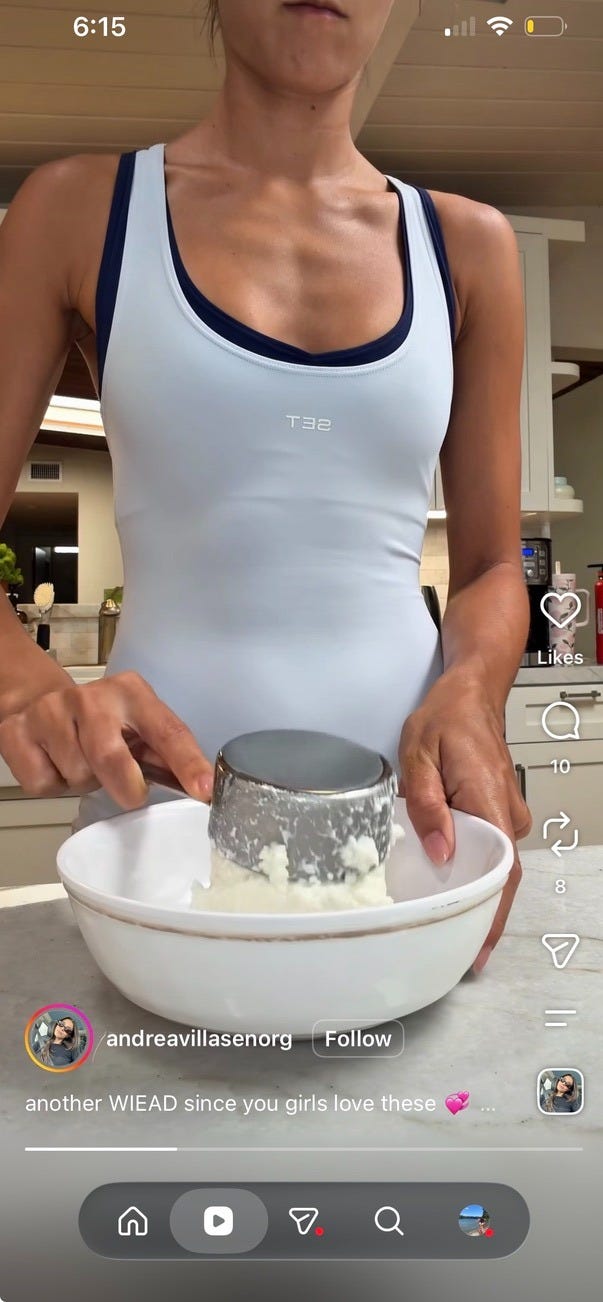
Despite my best efforts to avoid diet culture, the “what I eat in a day” genre has encroached on my Instagram reels. I keep opening my phone to rail-thin women wearing skintight pastel workout sets, arranging pomegranate seeds on yogurt and spiralizing zucchini in a sad imitation of spaghetti, not a dirty dish in sight. Sweetgreen’s marketing team can only aspire to their food porn prowess. It’s not just me: the hashtag #whatieatinaday has 1.5 million posts on Instagram. The popularity of the genre is staggering. Or is it?
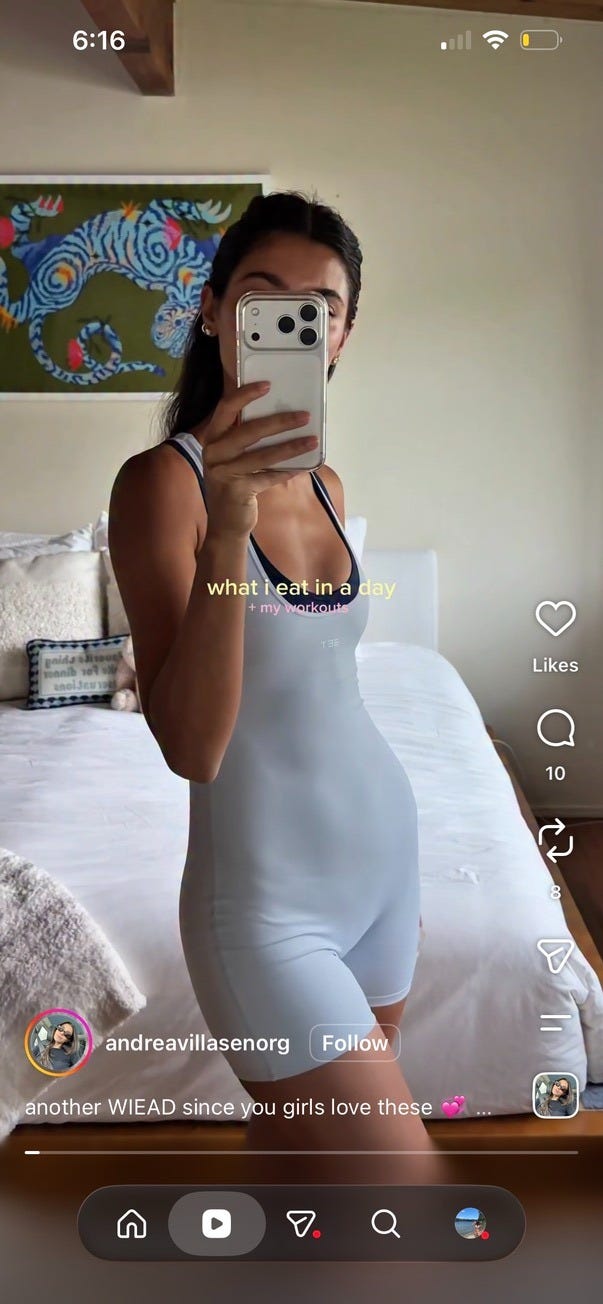
As the Ozempic epidemic dominates headlines and waistlines, we all know that this side of the internet can nourish eating disorders and promote unrealistic norms, even when it’s framed as innocuous healthy eating inspiration. When these dietary diarists visually juxtapose their food with their “perfect” physiques and workouts and apartments, they imply that self-abnegation produced their flawless bodies and, by extension, their flawless lives. The body positivity movement is more likely a blip of 2020 liberal utopia rather than a paradigm shift. But the less obvious manifestations of the cultural resurgence of skinny worship are worth interrogating too – particularly how this moment diminishes our capacity for collective organizing, not just our individual self-esteem. Many women have written about how keeping women skinny keeps us small, exhausted, and obedient. “What I eat in a day” videos illustrate that the cult of emaciation depletes our political fight by making us lonely, too.
The women in these videos are almost always eating alone. The sad truth is that breaking bread outside of their tightly curated confines could sabotage their dietary discipline. If they’re controlling every meal, they aren’t meeting friends for martinis after work or sharing a bucket of popcorn at the movie theater or accepting seconds of their grandmother’s famous mac and cheese. The message of this viral genre is that social life and human connection aren’t worth the caloric cost. In their empty, HGTV-sterile kitchens, these women suggest that we should excise from our lives the spontaneity and communion that make life delicious.
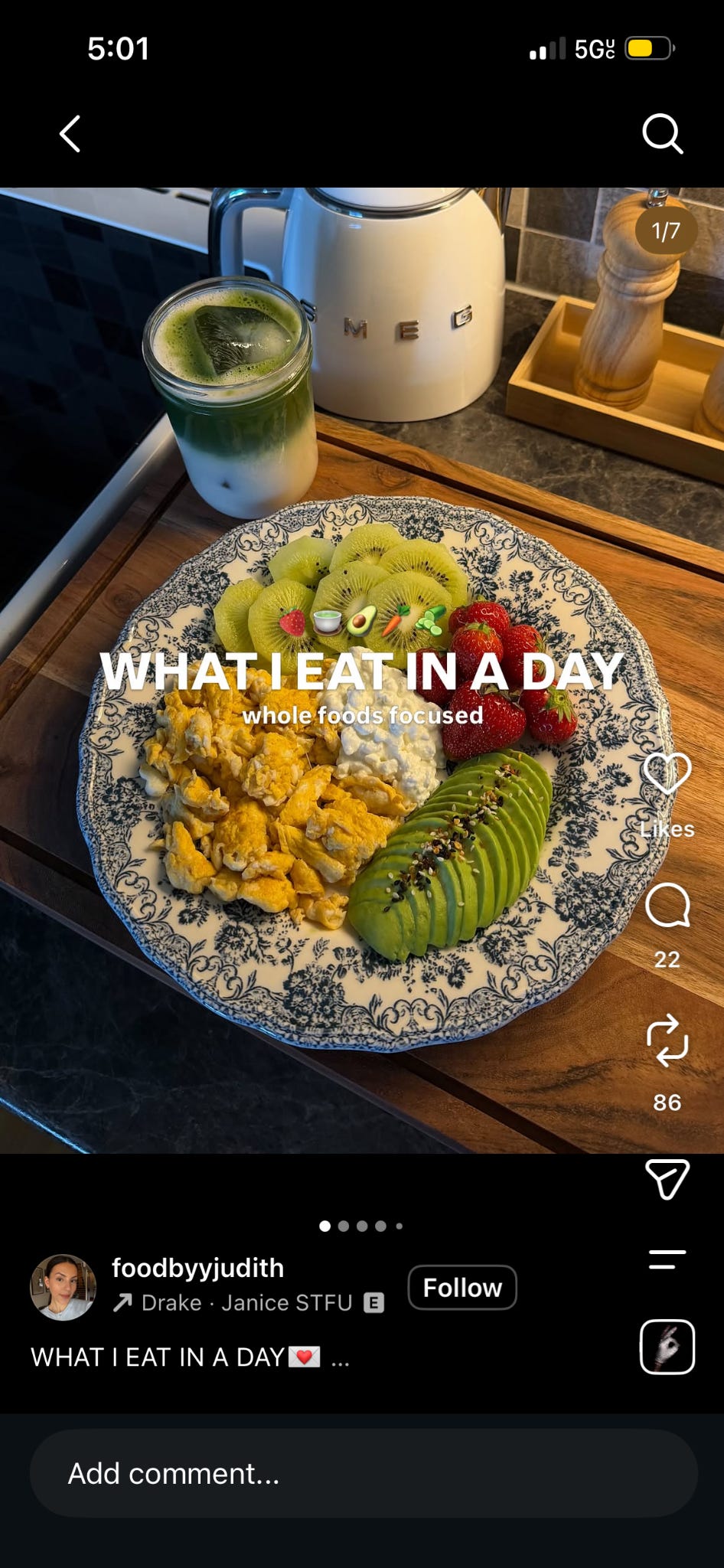
Sometimes, these influencers articulate their lifestyle prescriptions outright. In one clip that I can’t stop thinking about (and can no longer find…), a woman who looked about 23 boiled eggs and rambled to the camera about how she was spending New Year’s alone because drinking is unhealthy and she didn’t want to miss her 5am pilates class the next morning. That’s crazy, I remember thinking. You don’t have to binge drink to have a good time; rescheduling your workout class for after sunrise on New Years Day doesn’t diminish your fitness, or your social status as a Fit Person. But when you isolate yourself, you forfeit community – which is scientifically proven to be a greater boon to your health than extreme diet or exercise.
There are real political ramifications to the notion that we should subordinate what gives life meaning to the uncompromising pursuit of health. Today’s Right demands women embrace traditional femininity and derive all social satisfaction from their husband, children, and sourdough starter. But coalition building, of course, relies on the cultivation of community. And community is very often built around food, from the moms who brought boatloads of falafel to college protestors at pro-Palestine encampments to the new neighbors knocking on doors with a fresh batch of chocolate chip cookies, if anyone actually does that anymore.
A lot of young women – not just men – seem to lack community. Gen Z is reportedly the loneliest generation, with two-thirds describing being lonely. The feminist activism of the first Trump era, a natural locus for connection, has conspicuously dwindled. Last year’s Womens’ March was one-twentieth the size as in 2017. The spaces that organically facilitate female bonding are struggling, too. Enrollment at dedicated women’s colleges is declining. Colleges across the country are shuttering women’s and LGBTQ+ centers that might have offered both a social outlet and a platform for unlearning sexist propaganda, including the notion that our worth is correlated to our size. As we lose activist spaces and third spaces more broadly, we retreat into our phones. This reinforces our darkest thoughts and breeds echo chambers of shrinkage, when what we need is connection with real-life women who can lovingly call bullshit.
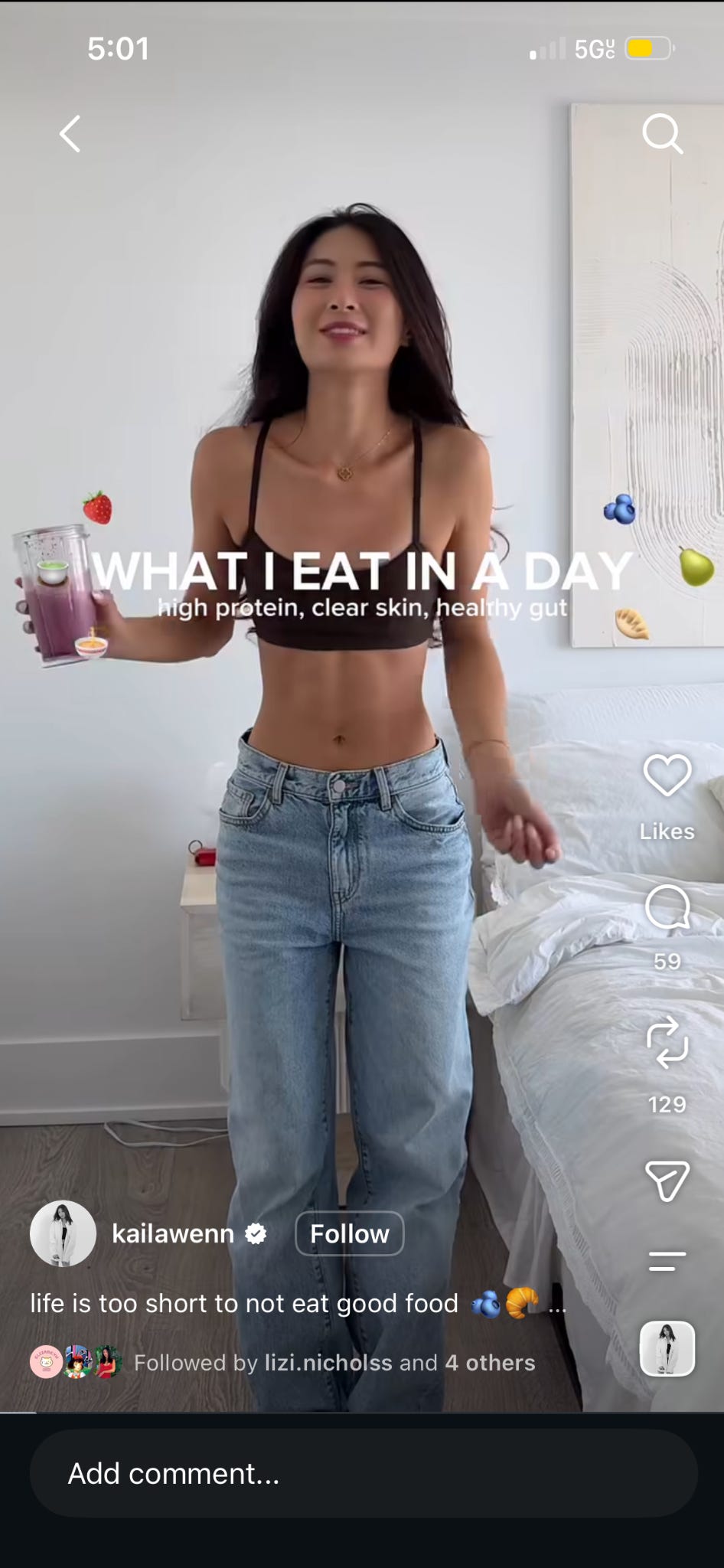
Robust movements are predicated on building meaningful relationships and prioritizing others. That sometimes necessitates surrendering control. And when we look beyond ourselves and into our communities, solidarity often involves accepting hospitality and trying food from other cultures, even when it comes deep-fried. The push for dietary rigidity reinforces our loneliness, keeping us isolated, disempowered, and increasingly vulnerable to a political project that recognizes hungry women are easier to control.
 |
|